Español
 العربية
 Francés
 Русский
 Português
 Deutsch
 Italiano
 Kazakh
 Uzbek
Uzbek

Revolutionary Breakthrough: High-Purity Bio-Based Vitamin C Achieves Commercial-Scale Production, Redefining Sustainability in Nutraceuticals
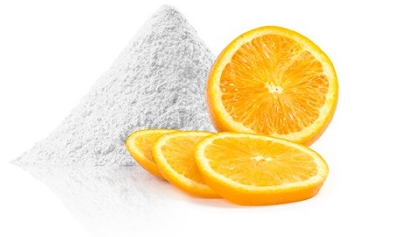
In a pivotal advancement for the global health and wellness industry, a 100% biomass-derived, food-grade L-ascorbic acid (vitamin C) with unprecedented purity (99.9%) and a 58% lower carbon footprint than traditional petroleum-based alternatives has entered commercial production. Developed through patented biocatalytic fermentation and closed-loop purification technologies, this breakthrough product meets the stringent safety standards of the U.S. Pharmacopeia (USP), European Pharmacopeia (EP), and EFSA for food contact materials, marking a paradigm shift toward sustainable ingredient sourcing.
1. Technical Milestones: Enzymatic Fermentation & Zero-Waste Processing
The core innovation lies in two patented green chemistry processes:
2. Sustainability Credentials & Full-Lifecycle Traceability
The bio-based vitamin C is backed by a robust certification framework:
3. Industry Impact: Performance Excellence & Formulation Innovation
Third-party testing highlights transformative advantages:
These properties enable breakthrough applications:
4. Strategic Partnerships & Market Adoption
Leading nutraceutical and cosmetic brands are accelerating adoption:
To facilitate market entry, the manufacturer offers:
5. Verifiable Data & Safety Assurance
All claims are validated by independent testing:
Conclusion
This bio-based vitamin C represents a tipping point in sustainable manufacturing, blending technical superiority with environmental stewardship. By decoupling production from fossil fuels while meeting the highest safety standards, it empowers brands to deliver on "clean label" and carbon-neutral commitments. As the global vitamin C market is projected to reach $5.8 billion by 2035, this innovation sets a new benchmark for green chemistry across industries.