Español
 العربية
 Francés
 Русский
 Português
 Deutsch
 Italiano
 Kazakh
 Uzbek
Uzbek

Montmorillonite: A Green Core Mineral Driving Low-Carbon Upgrading in the Global Functional Materials Industry
2026/03/05 14:44
Montmorillonite: A Green Core Mineral Driving Low-Carbon Upgrading in the Global Functional Materials Industry
Driven by the dual-carbon goals and the global shift toward green mining and advanced functional materials, montmorillonite—a layered aluminosilicate clay with exceptional adsorption, ion exchange, and barrier properties—is rapidly evolving from traditional low-grade filler to a high-value green functional material. Positioned as a foundational strategic mineral for environmental protection, new energy, biomedicine, and advanced manufacturing, it is spearheading the transformation of the mineral processing industry toward low-carbon, high-purity, and high-value-added development. Industry insiders note that breakthroughs in green beneficiation, intelligent modification, and high-performance modified systems signal that China’s high-purity clay mineral industry has entered a new era of “process greenization + application premiumization”.
From Traditional Beneficiation to Low-Carbon Intelligent Manufacturing: Technological Innovation Empowers Efficient Production
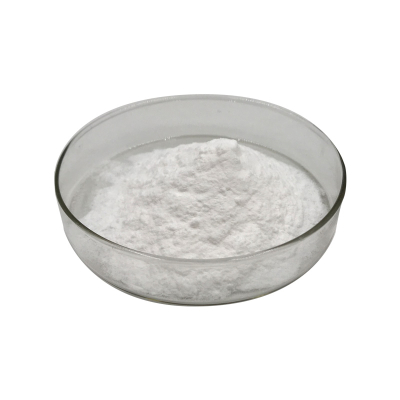
Montmorillonite (chemical formula: Al₂O₃·4SiO₂·H₂O; CAS No. 1318-93-0) is a typical 2:1 layered smectite mineral, appearing as a white-to-pale-yellow powder with strong hygroscopicity, swelling, and adsorption capacity. Traditional production relies heavily on wet beneficiation, which suffers from high water consumption, large wastewater discharge, low purity, and high energy consumption. In recent years, domestic enterprises have pioneered green process innovations, including dry purification, closed-circuit wet upgrading, electromagnetic calcination, and green modification, leading the global low-carbon transition of clay mineral processing.
“We have successfully deployed closed-circuit wet purification and electromagnetic precise calcination into the large-scale production of high-purity montmorillonite, achieving closed-loop water recycling and near-zero waste discharge,” said the R&D director of a leading Chinese functional clay producer. “Compared with the traditional open wet process, the new route boosts purity to over 98%, shortens production cycles by 35%, cuts overall unit energy consumption by more than 30%, and reduces water consumption per ton by over 70%. The closed production system also lowers non-methane total hydrocarbon emissions by more than 65%, fully complying with the strictest national and international environmental standards.”
Leading domestic producers have scaled up high-purity montmorillonite (purity ≥98%) production lines using green technologies. Pilot programs for bio-based modification and mineral waste residue synergistic utilization are underway, laying a solid foundation for full-life-cycle low-carbon development of the industrial chain.
Diversified High-Value Applications: Modified Derivatives as the Core Growth Engine
Benefiting from its unique layered structure, large specific surface area, and strong cation exchange capacity, montmorillonite can be organically modified, inorganically pillared, or nanocomposited to form a wide portfolio of high-value derivatives. Known as the “universal green functional filler,” it unlocks profound industrial value across high-growth sectors:
Environmental Protection & Water Treatment
As a high-efficiency, low-cost adsorbent, montmorillonite and its modified products remove heavy metals, organic pollutants, and mycotoxins from water and soil. Modified montmorillonite adsorbents achieve over 99% removal rates for Pb²⁺, Cd²⁺, and dyes, while organic montmorillonite effectively captures petroleum-based pollutants. It is widely used in industrial wastewater treatment, soil remediation, and marine spill cleanup.
Animal Health & Feed Safety
It serves as a natural, residue-free feed additive to adsorb mycotoxins (aflatoxin B₁ adsorption rate >90%), protect intestinal integrity, and reduce diarrhea in livestock and poultry. Green-modified grades comply with EU and FDA feed standards, supporting the healthy development of modern animal husbandry.
Advanced Materials & New Energy
Nanocomposites with montmorillonite enhance the mechanical strength, thermal stability, and gas barrier properties of biodegradable polymers (PBAT, PLA). In lithium-ion batteries, modified montmorillonite improves the stability and safety of separators and electrodes. It also acts as a rheological modifier in oil-based drilling fluids and a green catalyst carrier for CO₂ capture and energy-saving processes.
Pharmaceuticals & Personal Care
Pharmaceutical-grade montmorillonite is widely used in gastrointestinal mucosal repair and toxin elimination. High-purity, ultrafine grades serve as green thickeners, emulsifiers, and carriers in cosmetics and personal care, offering safe, mild, and biodegradable performance.
Building & Infrastructure
As an eco-friendly additive in cement, concrete, and asphalt, montmorillonite improves durability, impermeability, and crack resistance while reducing cement consumption and embodied carbon. It is also a core material for waterproof barriers in landfills and nuclear waste repositories.
Challenges and Opportunities: Chain Synergy as the Key to High-Quality Development
Despite strong market momentum, the montmorillonite industry faces challenges: low added value of traditional products, high cost of high-end modification, inconsistent international certification standards for pharmaceutical and new energy grades, and uneven green technology adoption among SMEs.
Experts emphasize that high-quality development requires breaking through “single mineral processing” and building an integrated “raw ore–beneficiation–modification–high-end application” industrial chain. “Deep collaboration between upstream mines, processors, universities, and end-users is critical,” noted a senior non-metallic mineral analyst. “Upstream, we must promote green mining and intelligent beneficiation. Midstream, focus on purification, modification, and nanometerization to improve purity and lower costs. Downstream, co-develop customized high-performance composites with material, pharmaceutical, and new energy enterprises and promote unified global standards.”
Outlook: A Core Engine for Green Transformation in Functional Materials
Supported by dual-carbon policies, tightening environmental regulations, and booming demand for green materials, montmorillonite is poised for historic growth. Its evolution represents both a low-carbon alternative to traditional mineral fillers and a cornerstone of the chemical and materials industry’s green and low-carbon system.
In the coming years, supported by policy and market forces, montmorillonite will accelerate raw-material low-carbonization and product high-endization. It will form a green industrial chain connecting mining, environmental protection, new energy, pharmaceuticals, and advanced materials, injecting strong momentum into China’s high-quality development of functional mineral materials and global dual-carbon goals.