Español
 العربية
 Francés
 Русский
 Português
 Deutsch
 Italiano
 Kazakh
 Uzbek
Uzbek

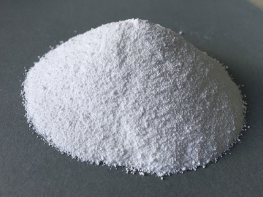
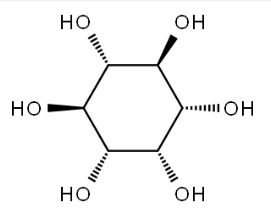
Inositol CAS# 87-89-8
CAS Number: 87-89-8
Chemical Formula: C6H12O6
Synonyms:
INOSITOL, MYO-;I-INOSITOL
HEXAHYDROXYCYCLOHEXANE INOSITOL
INOSITOL (MESO)
MOQ (Minimum Order Quantity): 1 FCL (Full Container Load)
Appearance: White Powder
Inositol belongs to the vitamins B class. Because of the different orientation of the relative ring plane of hydroxyl, it has a total of nine kinds of isomers, including 7 of non-optically active form, two kinds of optically active (L-form and D-form). In nature, it is widely distributed in all living tissues as either free or bound state, and is a common component presented in animal and plant cells. It can be synthesized by gastrointestinal microbes, being involved in carbohydrate and lipid metabolism in the body. It is mainly presented in the form of phosphatidylinositol in animal. It is most abundant in brain, heart and skeletal muscle. It is mainly in the form inositol phosphate in plants, and can bind with calcium, zinc and iron into insoluble compounds, which interfere with their digestion and absorption. Lack of inositol in daily diet can cause hair loss, and negatively affect development. Inositol is related to the intracellular calcium metabolism where its triphosphate derivative can be released from lipid conjugate after cell is stimulated, thus playing a role of secondary messenger. This process can mobilize the intracellular calcium pool to participate in regulation of many cellular events, e.g. secretion, metabolism, cell division, and light transmission.
Inositol is often clinically used together with vitamin B complex, which can prevent or reduce the deposition of excess fat in the liver, and thus promoting the liver fat metabolism. This has a effect on reducing blood lipids, and removing the infiltration effect of the liver cells’ fat. It can be used for treatment of fatty liver, alcohol liver disease, atherosclerosis, high blood cholesterol, diabetes, alopecia, hyperlipidemia and so on. Its derivatives, such as phosphatidylinositol is one of the components of the cell membrane. Phytate (phytic acid) or phytin (phytin) often accumulated in seeds of higher plants. Phytic acid extracted from rice bran or bran can be used as food antioxidants, stabilizers and preservatives.
Since the vast majority of animals and their gastrointestinal microbes can synthesize enough inositol, and food is abundant of inositol, so there are rare cases of inositol deficiency. Many kinds of fish and female gerbils cannot synthesize inositol (The testis tissue of male gerbil can synthesize inositol). Dietary phthaloyl Sulfathiazole can inhibit bacterial synthesis of inositol , which leads to rats’ deficiency of inositol, as follows: the content of free inositol in rat testis, liver, heart, kidney and plasma reduces; Hair loss and dermatitis happens; The content of triglycerides, cholesterol esters in liver increases; Both the size and number of lipid droplets increased significantly; There are also occurrence of fatty liver which can be healed by taking inositol; Moreover, the transport capacity of intestinal mucosal cell for the saturated fat cells decreases , and there is accumulation of intestinal fat. The performance of inositol deficiency for fish is as below: fins degeneration, edema, anemia, decreased gastric emptying rate, and decreased activity of cholinesterase and some transaminase.
Inositol Chemical Properties |
Melting point | 222-227 °C (lit.) |
Boiling point | 232.96°C (rough estimate) |
density | 1.75 |
vapor density | 6.2 (vs air) |
refractive index | 1.6170 (estimate) |
storage temp. | 2-8°C |
solubility | H2O: 0.5 M at 20 °C, clear, colorless |
pka | 12.63±0.70(Predicted) |
form | Crystalline Powder |
color | White |
Odor | odorless |
PH | 5-7 (100g/l, H2O, 20℃) |
Water Solubility | 14 g/100 mL (25 ºC) |
Merck | 14,4978 |
BRN | 1907328 |
Stability: | Stable. Combustible. Incompatible with strong oxidizing agents. |
Cosmetics Ingredients Functions | HUMECTANT |
InChIKey | CDAISMWEOUEBRE-GPIVLXJGSA-N |
LogP | -2.08 |
CAS DataBase Reference | 87-89-8(CAS DataBase Reference) |
NIST Chemistry Reference | Hexahydroxycyclohexane(87-89-8) |
EPA Substance Registry System | myo-Inositol (87-89-8) |
Safety Information |
Safety Statements | 22-24/25 |
WGK Germany | 2 |
RTECS | NM7520800 |
TSCA | TSCA listed |
HS Code | 29061390 |
Product Application of Inositol CAS#87-89-8
As food supplements, has a similar effect to vitamin B1. It can be used for infant foods and used in an amount of 210~250mg/kg; Used in drinking in an amount of 25~30mg/kg.
2. Inositol is an indispensible vitamin for lipid metabolism in the body. It can promote the absorption of hypolipidemic medicines and vitamins. Moreover, it can promote the cell growth and fat metabolism in liver and other tissues. It can be used for the adjuvant treatment of fatty liver, high cholesterol. It is widely used in food and feed additives, and is often added to fish, shrimp and livestock feed. The amount is 350-500mg/kg.
3. The product is one kind of the complex vitamin B, which can promote cell metabolism, improve the cell nutrient conditions, and can contribute to development, increase appetite, to recuperate. Moreover, it can prevent the accumulation of fat in the liver, and accelerate the process of removing excess fat in heart. It has a similar lipid-chemotactic action as choline, and therefore useful in the treatment of hepatic fatty excessive disease and cirrhosis of the liver disease. According to the "food fortifier use of health standards (1993)" (Issued by the Ministry of Health of China), it can be used for infant food and fortified beverages at an amount of 380-790mg/kg. It is a vitamin class medicines and lipid-lowering drug which promote the fat metabolism of liver and other tissues, and be useful for the adjuvant treatment of fatty liver and high cholesterol. It is widely used in additives of food and beverage.
4. Inositol is widely used in pharmaceutical, chemical, food, etc. It has a good effect on treating diseases such as liver cirrhosis. It can also used for advanced cosmetic raw materials, with high economic value.
5. It can be used as a biochemical reagent and also for the pharmaceutical and organic synthesis; It can lower the level cholesterol and have sedative effect.
Factory and Equipment Show
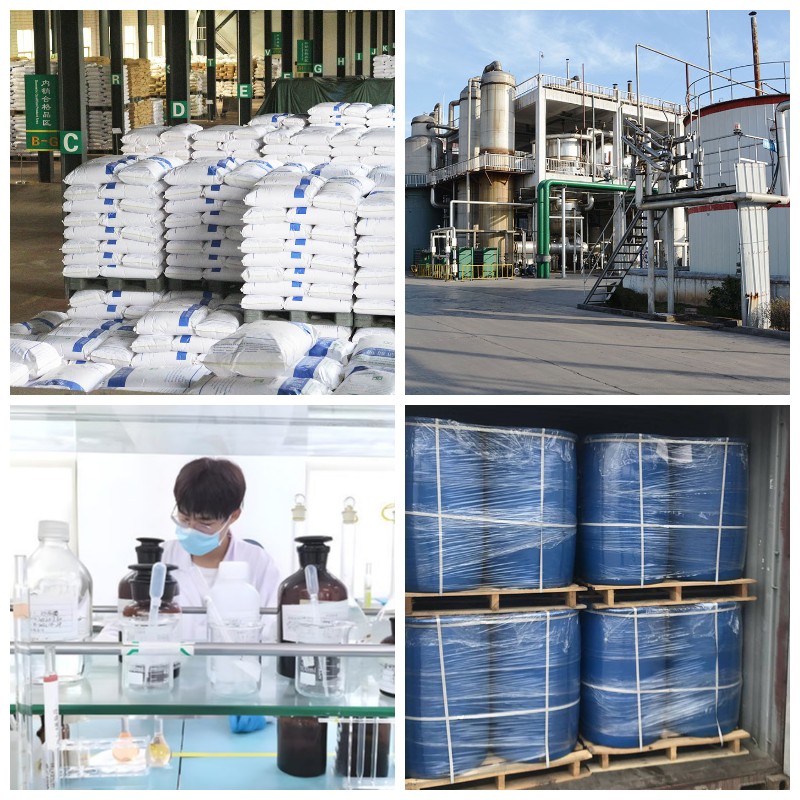
Fast delivery time
Inventory 2-3 working days New production 7-10 working days