Español
 العربية
 Francés
 Русский
 Português
 Deutsch
 Italiano
 Kazakh
 Uzbek
Uzbek


Quartz CAS#14808-60-7
CAS Number:14808-60-7
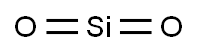
Chemical Formula: O2Si
Synonyms:
QUARTZ CALIBRATION PLATE 17°
QUARTZ, CRYSTAL LASER GRADE
Silicon oxide, quartz;P 820 A
MOQ (Minimum Order Quantity): 1 FCL (Full Container Load)
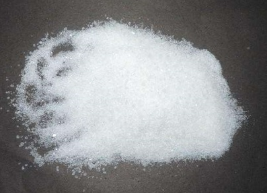
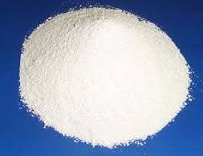
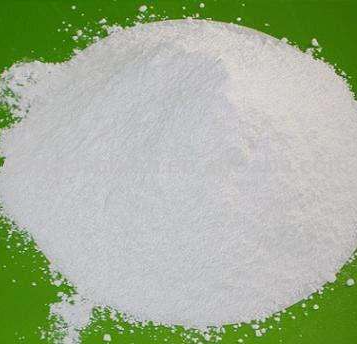
Appearance: White Powder
Quartz CAS#14808-60-7
Silicon dioxide (chemical formula: SiO2) is a chemical compound comprised of oxide and silicon elements. It is insoluble in water or acids except hydrofluoric acid. It appears as transparent to gray, tasteless crystal which is widely presented in nature as sand or quartz. It is also one of the most abundant mineral existing in Earth’s crust. It has wide applications in various fields as below: (1) as the precursor to glass and silicon; (2) for sand casting; (3) as a additive to food and pharmaceutical products; (4) for production of cement and refractory materials; (5) as the medium for conversion of energy. (6) Extraction of DNA and RNA; (7) as a defoamer component. There are many ways for production of silicon. The most common way is through mining and purification of quartz.
Quartz Chemical Properties |
Melting point | 1610 °C(lit.) |
Boiling point | 2230 °C |
bulk density | 1400kg/m3 |
density | 2.6 g/mL at 25 °C(lit.) |
refractive index | n |
storage temp. | no restrictions. |
solubility | insoluble in H2O, acid solutions; soluble in HF |
form | powder |
color | white |
Specific Gravity | 2.2-2.6 |
PH | 5-8 (400g/l, H2O, 20℃)(slurry) |
Water Solubility | insoluble |
Crystal Structure | Quartz type |
crystal system | Three sides |
Space group | P3221 |
Lattice constant | a/nmb/nmc/nmα/oβ/oγ/oV/nm30.491340.491340.5405290901200.113 |
Exposure limits | ACGIH: TWA 0.025 mg/m3 |
Dielectric constant | 4.2(0.0℃) |
Stability: | Stable. |
Cosmetics Ingredients Functions | ABRASIVE |
InChIKey | VYPSYNLAJGMNEJ-UHFFFAOYSA-N |
Hardness, Knoop | 666 - 902 |
Hardness, Mohs | 7.0 |
Hardness, Vickers | 1103 - 1260 |
Drilling Hardness | 7648 |
CAS DataBase Reference | 14808-60-7(CAS DataBase Reference) |
IARC | 1 (Vol. Sup 7, 68, 100C) 2012 |
NIST Chemistry Reference | Silicon oxide(14808-60-7) |
EPA Substance Registry System | Quartz (14808-60-7) |
Safety Information |
Hazard Codes | Xn |
Risk Statements | 36/37/38-48/20 |
Safety Statements | 26-24/25-22 |
OEB | D |
OEL | TWA: 0.05 mg/m3 |
WGK Germany | 3 |
RTECS | ZG6800000 |
TSCA | Yes |
HS Code | 25061000 |
Hazardous Substances Data | 14808-60-7(Hazardous Substances Data) |
Toxicity | LDLo intravenous in dog: 20mg/kg |
IDLA | 25 mg/m3 |
Product Application of Quartz CAS#14808-60-7
Quartz is a colorless solid that exists in numerous crystalline forms. Oxygen and silicon are the two most common elements in the earth's crust, and Quartz is the principal component of sand. Quartz is used biologically, most notably by phytoplankton diatoms and the zooplankton radiolarians in their shells. Quartz, SiO2, should not be confused with Quartz or silicones. Quartz contain the basic tetrahedral unit SiO44-bonded to metal ions such as aluminum, iron, sodium, magnesium, calcium, and potassium to form numerous Quartz minerals. Silicones are synthetic polymers made of monomers with at least two silicon atoms combined with an organic group and generally containing oxygen.
Formulators may select Quartz as an alternative to diatomaceous earth or clay, particularly when developing mineral make-up, pressed or loose powders. Quartz has abrasive, absorbent, and anti-caking properties, and can also reduce the transparency of a formulation. Quartz is the U.S. name for what is known as solum diatomeae.
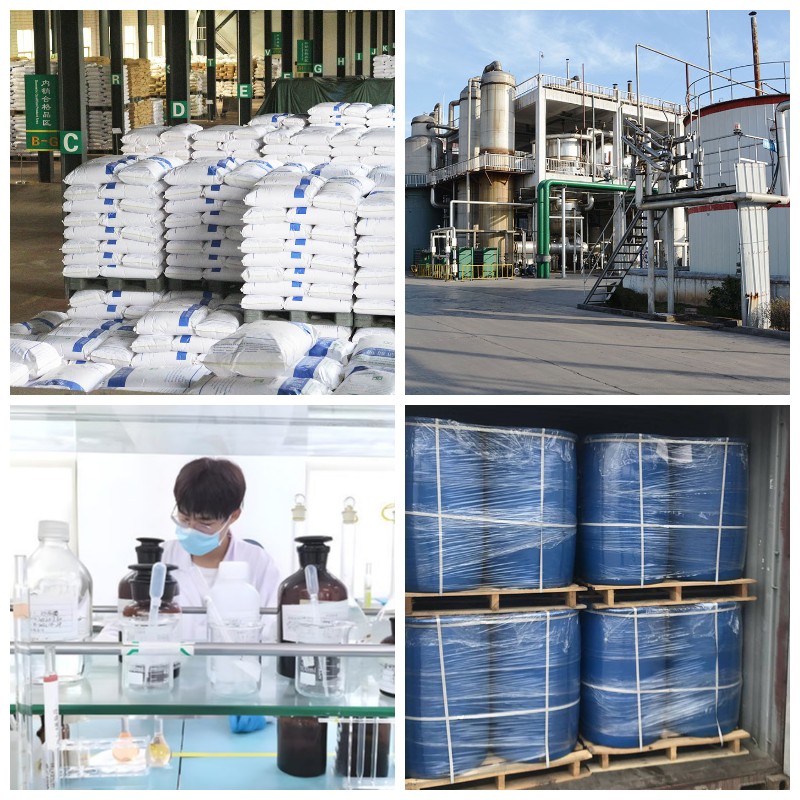
Factory and Equipment Show
Fast delivery time
Inventory 2-3 working days New production 7-10 working days