Español
 العربية
 Francés
 Русский
 Português
 Deutsch
 Italiano
 Kazakh
 Uzbek
Uzbek


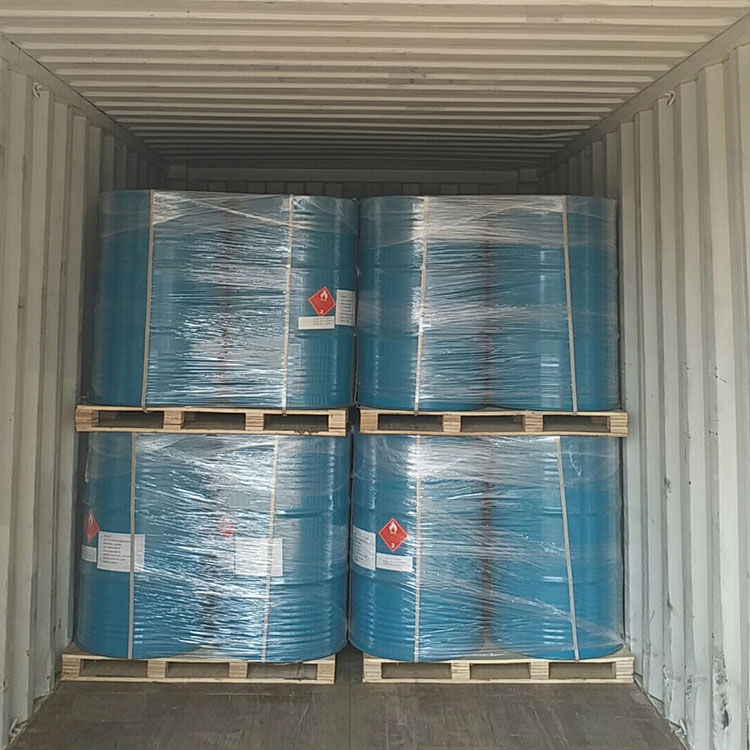
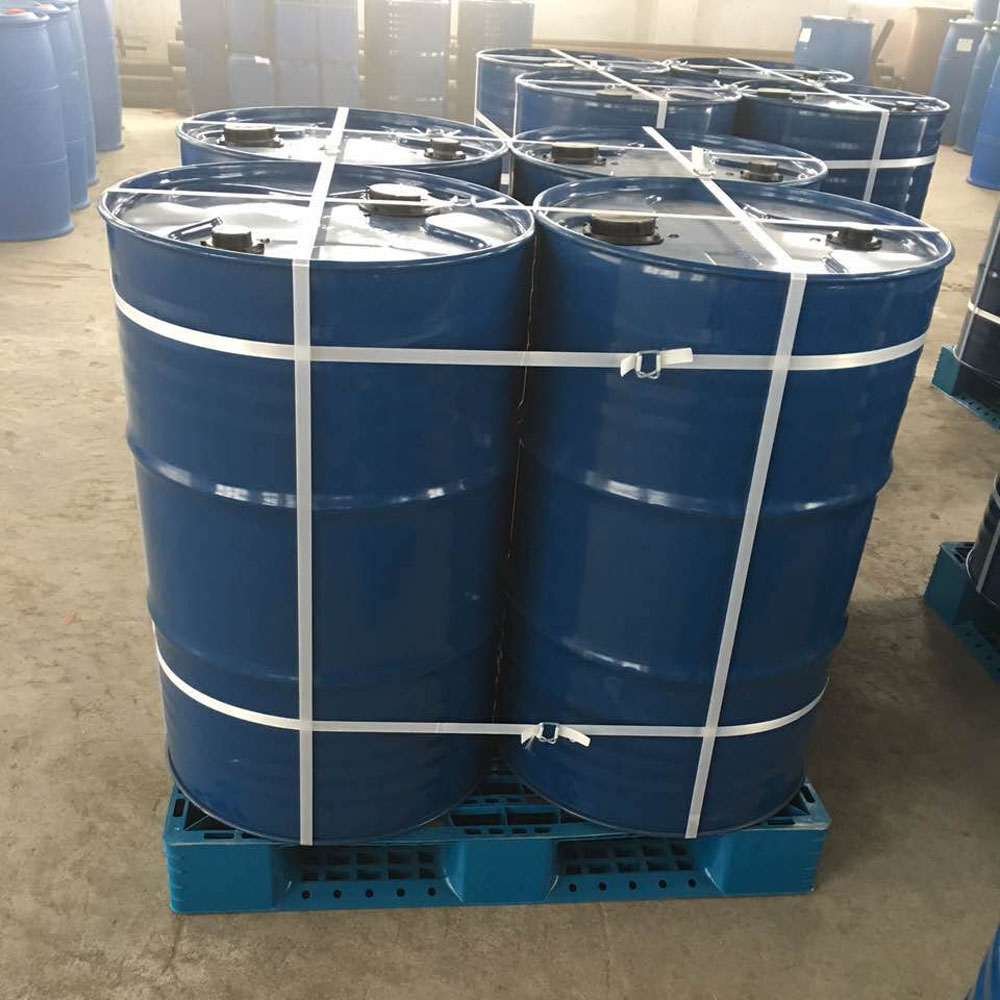
Titanium tetrachloride CAS#7550-45-0
CAS Number: 7550-45-0
Chemical Formula: Cl4Ti
Synonyms:
Titanium(IV) chloride, 1M solution in dichloromethane
Titanium(IV) chloride, 1M solution in toluene
Titanium(IV) Chloride (14% in Dichloromethane, ca. 1.0mol/L)
MOQ (Minimum Order Quantity): 1 FCL (Full Container Load)
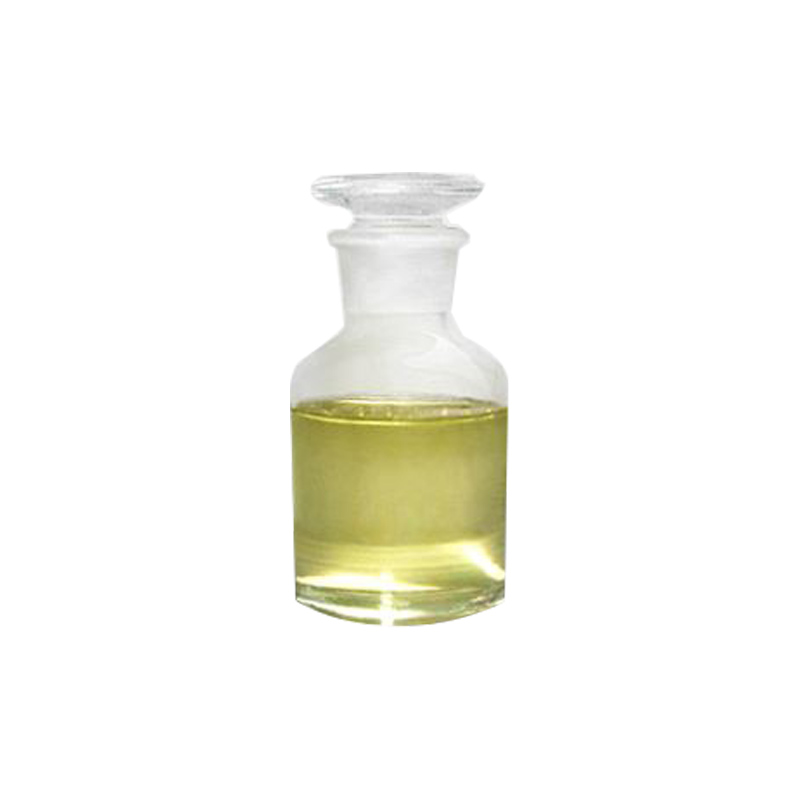
Appearance: Yellow Liquid
Titanium tetrachloride CAS#7550-45-0
Titanium ore was first discovered in 1791 in Cornish beach sands by an English clergyman, William Gregor. The actual identification of the oxide was made a few years later by a German chemist, M.H. Klaproth, who gave the metal constituent of this oxide the name titanium, after the Titans of Greek mythology. Pure metallic titanium was first produced in the early 1900s in 1910 by M.A. Hunter at Rensselaer Polytechnic Institute in cooperation with General Electric Company. |
Titanium tetrachloride Chemical Properties |
Melting point | −25 °C(lit.) |
Boiling point | 135-136 °C(lit.) |
density | 1.73 g/mL at 20 °C(lit.) |
vapor pressure | 50 mm Hg ( 55 °C) |
refractive index | 1.61 |
Fp | 46 °F |
storage temp. | Flammables area |
solubility | H2O: soluble |
form | Solution |
Specific Gravity | 1.726 |
color | Light yellow to dark brown |
Water Solubility | reacts |
Sensitive | Moisture Sensitive |
Hydrolytic Sensitivity | 8: reacts rapidly with moisture, water, protic solvents |
Merck | 14,9478 |
Exposure limits | ACGIH: TWA 50 ppm |
Dielectric constant | 40.0(Ambient) |
Stability: | Stable. Reacts with water. Incompatible with moisture, ammonia, amines, alcohols, potassium and other chemically active metals. |
InChI | 1S/4ClH.Ti/h4*1H;/q;;;;+4/p-4 |
InChIKey | XJDNKRIXUMDJCW-UHFFFAOYSA-J |
SMILES | [Ti+4].[Cl-].[Cl-].[Cl-].[Cl-] |
CAS DataBase Reference | 7550-45-0(CAS DataBase Reference) |
NIST Chemistry Reference | Titanium tetrachloride(7550-45-0) |
EPA Substance Registry System | Titanium tetrachloride (7550-45-0) |
Safety Information |
Hazard Codes | C,F,Xi,T |
Risk Statements | 36/37/38-67-65-63-48/20-34-14-11-23-40-37-48/23-39/23-20/21/22-36/38 |
Safety Statements | 26-7/8-62-46-45-36/37/39-24/25-23-16-60 |
RIDADR | UN 3289 6.1/PG 2 |
WGK Germany | 2 |
RTECS | XR1925000 |
F | 21 |
TSCA | TSCA listed |
HazardClass | 8 |
PackingGroup | II |
HS Code | 28273990 |
Storage Class | 6.1B - Non-combustible, acute toxic Cat. 1 and 2 |
Hazard Classifications | Acute Tox. 1 Inhalation |
Hazardous Substances Data | 7550-45-0(Hazardous Substances Data) |
Toxicity | Not found naturally in the environment. Manufactured from titanium-containing minerals and is used to make metallic titanium, titanium dioxide, and other titanium compounds. An irritant to skin, eyes, mucus membranes, and lungs due to its interaction with water to form hydrochloric acid, excessive exposure can result in chemical bronchitus, pneumonia, and death. Severe burns may result from contact with liquid titanium tetrachloride. Although long term, high dose studies caused lung tumors in rodents, IARC and other agencies have not classified titanium tetrachloride for its potential as a human carcinogen. |
Product Application Of Titanium tetrachloride CAS#7550-45-0
Titanium tetrachloride is used as an intermediate in the manufacture of titanium metal, titanium dioxide, titanous chloride pigments, iridescent glass, and artificial pearls and as a starting material for a variety of organic and inorganic titanium compounds. It is also used as a dye, a polymerization catalyst, and as a catalyst in many organic syntheses because of it acidity and oxophilicity in many applications in the chemical industry. Titanium tetrachloride was formerly used as a smokeproducing screen with ammonia for the military; however, due to its extremely irritating and corrosive qualities in both liquid and smoke formulation, military applications are rarely used. The conversion of tetrachloride to titanium metal takes place by the reduction of chloride with magnesium which yields titanium metal and magnesium chloride and is referred to as the Kroll process after its inventor:
2 Mg + TiCl4→2 MgCl2 + Ti
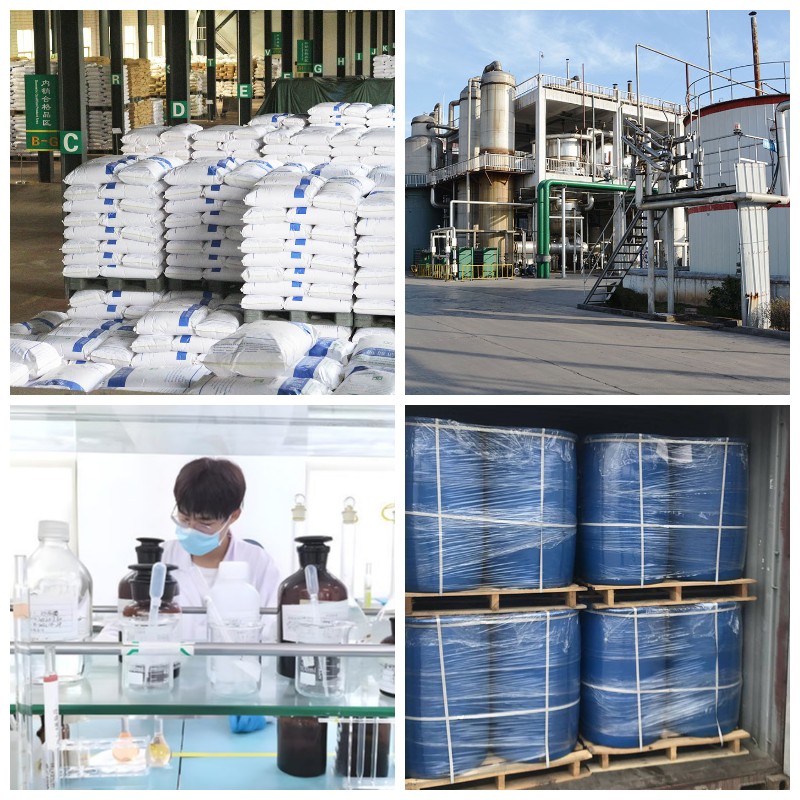
Fact Factory and Equipment Show
Fast delivery time
Inventory 2-3 working days New production 7-10 working days