Español
 العربية
 Francés
 Русский
 Português
 Deutsch
 Italiano
 Kazakh
 Uzbek
Uzbek

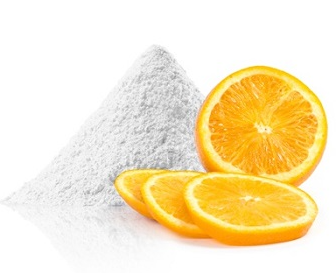
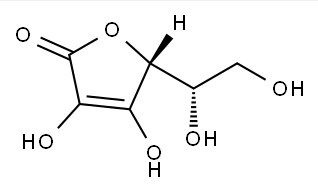
Ascorbic Acid CAS#50-81-7
CAS Number: 50-81-7
Chemical Formula: C6H8O6
Synonyms:
3-oxo-l-gulofuranolactone(enolform)
MOQ (Minimum Order Quantity): 1 FCL (Full Container Load)
Appearance: White powder
Ascorbic acid, a water-soluble dietary supplement, is consumed by humans more than any other supplement. The name ascorbic means antiscurvy and denotes the ability of ascorbic to combat this disease. Vitamin C is the l-enantiomer of ascorbic acid. Ascorbic acid deficiency in humans results in the body’s inability to synthesize collagen, which is the most abundant protein in vertebrates.
Ascorbic Acid Chemical Properties |
Melting point | 190-194 °C (dec.) |
alpha | 20.5 º (c=10,H2O) |
Boiling point | 227.71°C (rough estimate) |
density | 1,65 g/cm3 |
FEMA | 2109 | ASCORBIC ACID |
refractive index | 21 ° (C=10, H2O) |
storage temp. | Store at +5°C to +30°C. |
solubility | H2O: 50 mg/mL at 20 °C, clear, nearly colorless |
pka | 4.04, 11.7(at 25℃) |
form | powder |
color | white to slightly yellow |
Appearance | colorless solid |
Odor | Odorless |
PH | 3.59(1 mM solution);3.04(10 mM solution);2.53(100 mM solution); |
PH Range | 1 - 2.5 |
Odor Type | green |
Optical Rotation | [α]25/D 19.0 to 23.0°, c = 10% in H2O |
biological source | synthetic (organic) |
Water Solubility | 333 g/L (20 ºC) |
Merck | 14,830 |
BRN | 84272 |
BCS Class | 1 |
Stability: | Stable. May be weakly light or air sensitive. Incompatible with oxidizing agents, alkalies, iron, copper. |
Cosmetics Ingredients Functions | ANTIOXIDANT |
InChIKey | CIWBSHSKHKDKBQ-JLAZNSOCSA-N |
LogP | -1.85 |
CAS DataBase Reference | 50-81-7(CAS DataBase Reference) |
NIST Chemistry Reference | L-Ascorbic acid(50-81-7) |
EPA Substance Registry System | Ascorbic acid (50-81-7) |
Absorption | cut-off at 306nm in H2O at 1M |
Safety Information |
Hazard Codes | |
Risk Statements | |
Safety Statements | 24/25-36-26 |
WGK Germany | 1 |
RTECS | CI7650000 |
TSCA | Yes |
HS Code | 29362700 |
Hazardous Substances Data | 50-81-7(Hazardous Substances Data) |
Toxicity | LD50 oral in rat: 11900mg/kg |
Product Application of Ascorbic Acid CAS#50-81-7
Sodium, potassium, and calcium salts of ascorbic acids are called ascorbates and are used as food preservatives. To make ascorbic acid fat-soluble, it can be esterified. Esters of ascorbic acid and acids, such as palmitic acid to form ascorbyl palmitate and stearic acid to form ascorbic stearate, are used as antioxidants in food, pharmaceuticals, and cosmetics. Ascorbic acid is also essential in the metabolism of some amino acids. It helps protect cells from free radical damage, helps iron absorption, and is essential for many metabolic processes.
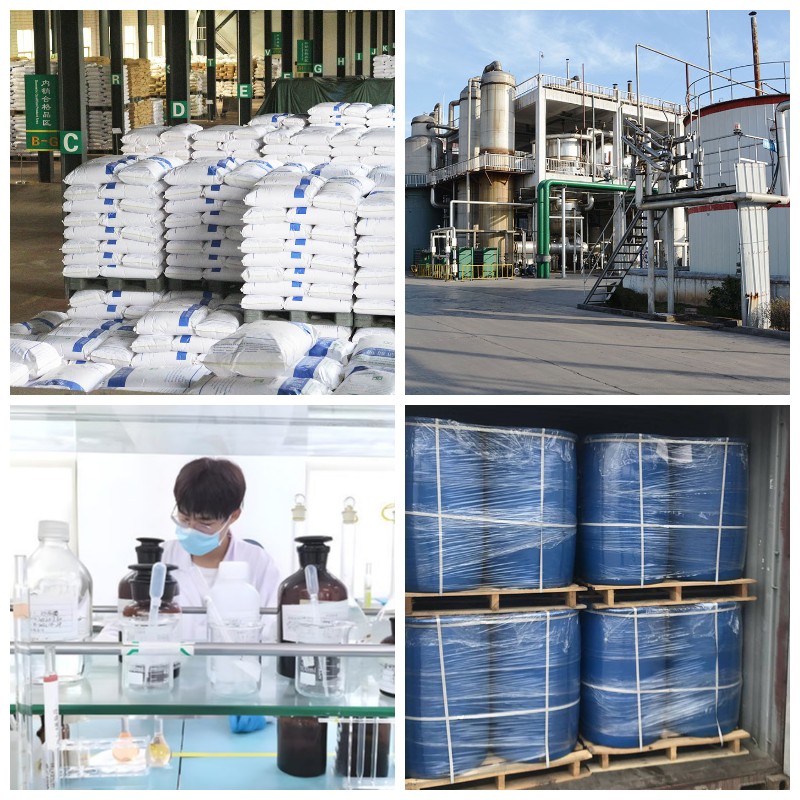
Factory and Equipment Show
Fast delivery time
Inventory 2-3 working days New production 7-10 working days