Español
 العربية
 Francés
 Русский
 Português
 Deutsch
 Italiano
 Kazakh
 Uzbek
Uzbek

World's First Food-Contact Grade Bio-Based N,N'-Ethylenebis(stearamide) Enters Mass Production
EFSA & FDA Certification Sparks Green Revolution in Plastics, Coatings and Food Packaging
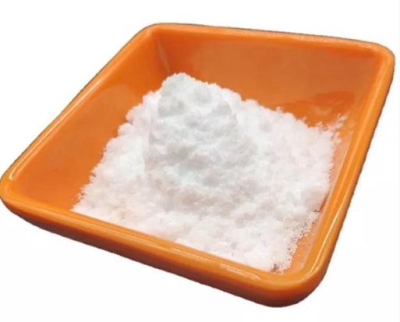
At a pivotal moment when the global plastics, packaging and processing industries are pursuing safety, food contact compliance, circularity and sustainability, a breakthrough has arrived in amide wax production. Today, a high-purity, food-contact grade N,N'-Ethylenebis(stearamide) (EBS) derived from 100% sustainable biomass feedstock has officially entered commercial-scale mass production. Having passed the stringent assessments of the European Food Safety Authority (EFSA) and U.S. Food and Drug Administration (FDA), this product delivers a low-carbon footprint and full regulatory compliance, offering a new-generation multifunctional additive for plastics, coatings, inks and food packaging, combining exceptional processing performance with environmental safety credentials.
1. Technical Milestones: Green Synthesis & Precision Purification
The core of this mass production lies in two patented technologies grounded in green chemistry and circular manufacturing:
Closed-Loop Biobased Amination & Condensation Process
Patented Process: Utilizes renewable raw materials (biobased stearic acid and biobased ethylenediamine) and a highly selective catalytic condensation system under mild thermal conditions. Compared to traditional fossil-based EBS production, this route eliminates high-salt wastewater, cuts energy use by over 35%, reduces volatile organic compound (VOC) emissions by more than 70%, and achieves a product purity of up to 99.6%.
Ultra-Low Impurity Precision Refining
Subsequent integration of short-path distillation and spray crystallization technologies precisely controls residual acid, amine and volatile impurities. Key indicators meet global top-tier standards:
Acid Value ≤ 5 mg KOH/g
Amine Value ≤ 3 mg KOH/g
Moisture ≤ 0.3%
Particle size (micro-pulverized grade) d50 ≈ 6 μm, d90 ≈ 12 μm
This meets the most stringent requirements for food contact, high-gloss coatings, and precision plastic processing.
Circular Solvent & Energy Recovery
The full production line employs a closed-loop solvent recovery and waste-heat recycling system, achieving a solvent reuse rate >99.7% and realizing stable, low-carbon continuous production.
2. Sustainability Certifications and Full-Chain Traceability
This biobased EBS holds a complete set of authoritative safety and sustainability certifications:
EFSA / EU 10/2011 | Approved for use as a lubricant and processing aid in food contact plastics and materials |
FDA 21 CFR 175.300 / 177.1520 | Authorized for indirect food contact applications |
ISCC PLUS | Full mass-balance traceability from non-food biobased feedstock to finished product |
Carbon Trust Verified | Cradle-to-gate carbon footprint reduced by >60% vs. fossil-based EBS |
GB 4806.XX (China Food Contact) | Complies with Chinese national food contact material standards |
3. Industry Impact: Performance Advantages & Application Upgrade
Third-party comparative testing confirms this biobased EBS outperforms conventional fossil-based grades:
Thermal Stability | Stable up to 320°C, no discoloration | 300–310°C, slight yellowing | Enhanced high-temperature resistance |
Lubrication & Release | Excellent internal & external lubricity | Stable but variable | More balanced lubrication |
Dispersion in Polymers | Uniform, no agglomeration | Occasional agglomeration | Better pigment & filler dispersion |
Gloss of Finished Products | High, smooth, scratch-resistant | Medium gloss | Significantly improved surface quality |
Food Contact Safety | Fully compliant | Limited grades only | Universal regulatory access |
Downstream Value
Plastics: Improves flow, mold release and surface finish of PE, PP, ABS, PS, PVC and engineering plastics; ideal for food containers, films and injection-molded parts.
Coatings & Inks: Acts as anti-blocking, anti-scratch and leveling agent; improves printing and coating stability.
Rubber & Masterbatch: Boosts filler dispersion and processing efficiency without compromising mechanical properties.
Cost Saving: Reduces mold deposits, extends cleaning cycles, and lowers rejection rates by 1–3%.
4. Corporate Collaboration & Strategic Procurement
A global top-tier food packaging manufacturer has adopted this biobased EBS as its preferred lubricant for high-speed thermoforming lines. Joint test results show:
Improved production efficiency by ~12%
Reduced surface defects by ~80%
Fully meets food contact and low-carbon labeling requirements
The group has added this grade to its 2025–2026 global approved raw material list, with an initial annual procurement volume of 1,800 tonnes.
To accelerate market adoption, the manufacturer offers:
Application Development Support: Formulation guidance for plastics, masterbatch, coatings and inks.
One-Stop Compliance Dossier: Full REACH, TSCA, FDA, EFSA, GB 4806 and safety data sheets.
Green Procurement Incentive: Priority supply and carbon credit linkage for the first 1,500 tonnes of ISCC PLUS certified orders.
5. Verifiable Data and Safety Assurance
All performance and safety claims are based on international standards:
Impurity Control: Complies with ISO 25140, USP-NF and domestic food contact standards.
Ecotoxicity: Readily biodegradable (OECD 301D), low eco-toxicity.
Toxicology: Non-irritating to skin; acute oral LD₅₀ > 2000 mg/kg.
Heavy Metals: Lead ≤ 5 ppm, Cadmium ≤ 1 ppm, compliant with global food contact limits.
The mass production of food-contact grade biobased N,N'-Ethylenebis(stearamide) marks a major leap in sustainable additives for plastics, coatings and food packaging. It enables brand owners to meet global food safety and carbon-reduction goals while driving the industry’s fundamental shift toward green manufacturing.