Español
 العربية
 Francés
 Русский
 Português
 Deutsch
 Italiano
 Kazakh
 Uzbek
Uzbek

Sodium Hydride Industry Enters Window of Technological Upgrade: Surging Demand for Highly Active Catalysts, Safety and Green Processes Become Competitive Focus
Sodium Hydride Industry Enters Window of Technological Upgrade: Surging Demand for Highly Active Catalysts, Safety and Green Processes Become Competitive Focus
Industry Overview: Value Reshaping from Hazardous Chemical to Key Reagent in Fine Synthesis
Sodium hydride (NaH), one of the most important strong basic reducing agents in organic synthesis, is undergoing a strategic repositioning from a "laboratory hazard" to a "core reagent in high-end pharmaceuticals." This ionic compound, composed of sodium ions and hydride ions, holds an irreplaceable position in the synthesis of pharmaceuticals, pesticides, and advanced materials due to its extremely high reactivity and selectivity. Driven by sustained growth in global innovative drug R&D investment and the deepening concept of green chemistry, the sodium hydride industry is entering a technological upgrade cycle centered on high purity, high safety, and recyclable processes.
1. Core Properties and Synthetic Value: An Irreplaceable Strong Basic Reducing Agent
Sodium hydride demonstrates unique value in organic synthesis:
Extremely Strong Basicity: Capable of abstracting protons from weakly acidic compounds (e.g., alcohols, amines, terminal alkynes) to generate the corresponding reactive sodium salt intermediates.
Excellent Reducibility: As a strong hydride ion donor, it can efficiently reduce various functional groups such as aldehydes, ketones, and esters.
High Reaction Selectivity: Enables highly selective reactions at specific sites in complex molecule synthesis, reducing by-products.
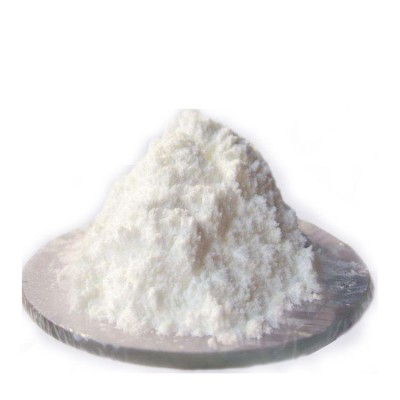
Safety Challenges: The pure compound is a grayish-white powder, highly pyrophoric in air, and reacts violently with water to generate sodium hydroxide and hydrogen gas (explosion risk). This necessitates the industry to handle it as an oil dispersion (typically 60% in mineral oil) for safe storage, transportation, and use.
2. Market Dynamics: Pharmaceutical R&D Drives High-End Demand, Chinese Capacity Rapidly Catches Up
The global sodium hydride market (calculated as 60% oil dispersion) reached approximately $420 million in 2024 and is projected to grow to $460 million in 2025, with a Compound Annual Growth Rate (CAGR) of 9.5%. By 2030, the market size is expected to exceed $700 million.
Demand Structure Evolution: Pharmaceutical R&D and production is the absolute dominant sector, contributing over 75% of consumption with an annual growth rate exceeding 12%. Pesticide and advanced fragrance synthesis accounts for about 15%, while emerging applications like polymer initiators constitute 10%.
Supply Landscape: The high-end market has long been dominated by leading fine chemical companies in Europe, America, and Japan (e.g., Albemarle, BASF, Nippon Soda). China, as a contender, has achieved large-scale, stable production of the 60% oil dispersion and holds a major share of the global mid-range market. In 2024, China's exports of sodium hydride and related intermediates exceeded 8,000 tons, primarily flowing to India, Southeast Asia, and some European markets.
Price Structure: The price for industrial-grade 60% oil dispersion is around $12,000 - $18,000 per ton. In contrast, ultra-high purity (>99.5%), low metal impurity (Na, Fe, Pb, etc. <10 ppm) products for GMP pharmaceutical production can command prices 3-5 times that of standard industrial grade.
3. Technological Breakthroughs: Microencapsulation and Continuous Flow Processes Lead Safety Revolution
Traditional sodium hydride production (high-temperature, high-pressure reaction of sodium metal with hydrogen) and the predominant oil-dispersed form still face safety and efficiency bottlenecks. Cutting-edge technologies focus on:
Microencapsulation Technology: Encapsulating sodium hydride nanoparticles with polymer or silica shells to create physical isolation. This product is stable in air, releasing the active component only in specific solvents during use, reducing transportation and handling hazards by over 90% and improving reaction efficiency by about 30%.
Continuous Flow Synthesis and Online Quenching Systems: Conducting hazardous reactions involving sodium hydride in microchannel reactors, enabling precise reagent dosing, rapid mixing, efficient heat transfer, and integrating the post-reaction quenching process. This fundamentally avoids the accumulation of large quantities of hazardous intermediates, particularly suitable for scale-up production above the kilogram scale.
Functionalized Carrier Technology: Developing novel porous inorganic or polymeric carriers to achieve high dispersion and loading of sodium hydride. The carrier can be recovered and regenerated after reaction, significantly reducing waste generation and aligning with green chemistry principles.
Precision Impurity Control Processes: Using zone-refined sodium raw material, high-purity hydrogen protection, and special post-treatment to consistently control key toxic metal impurities (e.g., lead, cadmium) at the ppb (parts-per-billion) level, meeting the stringent requirements for synthesizing cytotoxic innovative drugs.
4. Application Expansion: From Classical Reactions to Frontier Bioconjugation
Small Molecule Innovative Drug Synthesis: Serves as a key base reagent in constructing C-N, C-O, C-C bonds and synthesizing heterocyclic compounds, used in the production routes of numerous blockbuster anticancer and antiviral drugs.
Antibody-Drug Conjugates (ADCs): Used in ADC drug linker synthesis to efficiently and selectively activate specific functional groups, enabling precise conjugation of toxin molecules to antibodies.
Polymer Materials: Acts as an anionic polymerization initiator for synthesizing structurally well-defined block copolymers and high-performance elastomers.
New Energy Materials: Serves as a precursor or modifier in the R&D of solid-state electrolytes (e.g., sodium borohydride-based materials) for sodium-ion batteries, representing an exploratory frontier.
5. Future Outlook: Safety, Customization, and Industry Chain Collaboration
Key Growth Drivers:
Global Wave of New Drug R&D: Continuous innovation in small molecule drugs and ADCs creates rigid demand for highly selective and efficient synthetic tools.
Stringent Safety Regulations: Increasingly strict global management of hazardous chemicals forces the industry to upgrade to safer forms and usage protocols.
Demand for Greener Processes: The pharmaceutical industry's pursuit of a reduced environmental footprint drives the development of recyclable, low-waste catalyst technologies.
Main Challenges:
High Technical and Patent Barriers: High-end products involve complex purification, encapsulation, and production safety technologies covered by patents held by international giants, making it difficult for latecomers to break through.
Raw Material and Energy Costs: The cost of high-quality sodium metal and electricity accounts for a significant portion of the total cost, with price volatility having a major impact.
Market Education and Application Services: Downstream users (especially R&D-focused pharmaceutical companies) have usage habits, promoting new safe products requires strong technical support and application development services.
Industry Insight: The sodium hydride industry stands at a crossroads, transitioning from a "hazardous bulk reagent" to a "safe, customized synthesis tool." Chinese enterprises have already established advantages in scale and cost control, but future competitiveness will depend on breakthroughs in safety innovation (e.g., microencapsulation), extreme impurity control, and the ability to provide customized solutions for downstream innovative pharmaceutical companies. For domestic leading enterprises, extending into high-value-added downstream applications, establishing early-stage R&D collaborations with international top-tier pharmaceutical companies, and actively investing in materials science for emerging fields like solid-state sodium batteries will be the key path to ascending the value chain.