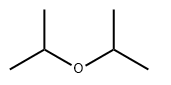
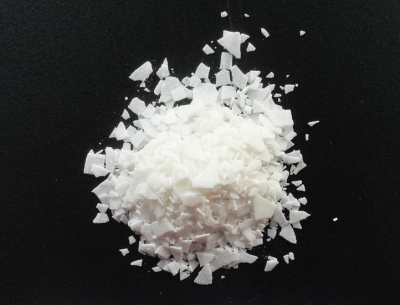
At a pivotal moment when the global personal care and cosmetics industry is pursuing safety, natural origins, and sustainability, a breakthrough has arrived in benzyl alcohol production. Today, a high-purity, food-contact grade benzyl alcohol derived from 100% sustainable biomass feedstock has officially entered commercial-scale mass production. Having passed the stringent assessment of the European Food Safety Authority and earned authoritative certification for its low carbon footprint, this product offers a new-generation foundational ingredient for high-end fragrances, natural preservatives, and coatings, combining exceptional performance with environmental credentials.
1. Technical Milestones: Biocatalytic Oxidation and Supercritical Extraction
The core of this mass production lies in two patented technologies grounded in green chemistry principles:
Enzymatic Selective Oxidation Process
Patented Process: Utilizes a novel immobilized alcohol dehydrogenase catalyst to efficiently and selectively oxidize sustainably sourced phenethyl alcohol to benzyl alcohol under mild conditions (≤45°C, ambient pressure). Compared to traditional chemical oxidation, this process eliminates the use of heavy metal catalysts, reduces by-products by over 70%, and achieves a target product selectivity of 99.5%.
Ultimate Purity: Subsequent integration of molecular sieve adsorption coupled with supercritical CO₂ extraction purification technology specifically removes trace aldehyde impurities, ensuring the final product's benzaldehyde content is consistently ≤100 ppm. This meets the most stringent requirements for fragrance and sensitive skin applications.
Closed-Loop Solvent Recovery System
The entire production process employs a closed-loop solvent management system, achieving a solvent recovery and reuse rate of >99.8%, drastically reducing VOC emissions and waste generation at the source.
![苯甲醇- Wikiwand]()
2. Sustainability Certifications and Full-Chain Traceability
This bio-based benzyl alcohol's environmental and safety credentials are backed by a complete set of international authorities:
3. Industry Impact: Performance Advantages and Formulation Innovation
Third-party comparative test data reveals its significant advantages in application:
Downstream Benefits: In perfumes and high-end care formulations, its exceptional purity and stability allow it to function as a safer, milder preservative synergist, partially replacing parabens. Its inherent solvent properties can also optimize fragrance release profiles. Comprehensive estimates suggest potential cost savings of $80-120 per ton of finished formulation for downstream customers.
4. Corporate Collaboration Case and Strategic Procurement
A leading international cosmetics group has adopted this bio-based benzyl alcohol as a key solvent and fragrance carrier in its newly launched "Clean Beauty" series. A joint technical brief states:
"The successful application of this ingredient allows our new product line to simultaneously meet the dual market demands for 'natural origin' and 'food-contact safety grade'. Accelerated testing shows it improves the fragrance-fixing effect throughout the product lifecycle by approximately 15%. Consequently, the group has included it in its Asia-Pacific 2024-2025 strategic raw material list, with an initial annual procurement plan of 1,200 tonnes."
To accelerate market adoption, the manufacturer has launched a special support program:
Application Development Kit: Provides new customers with pre-research data and formulation recommendations for compatibility with various fragrance and preservative systems.
One-Stop Compliance Service: Offers a complete compliance dossier including REACH, IFRA, and inclusion proof for the China Cosmetic Ingredient Directory.
Green Procurement Incentive: The first 1,000 tonnes of ISCC PLUS certified batch orders will be directly linked to carbon credits, offering a 2% green subsidy.
5. Verifiable Data and Safety Assurance
All claims are based on publicly verifiable standards and data:
Critical Impurity Control: Testing for benzaldehyde, styrene, and other impurities follows ISO 25140:2023 and USP-NF standards.
Ecotoxicology: OECD 301D ready biodegradability test results show a degradation rate >85% within 28 days.
Comprehensive Safety Data: Skin irritation/corrosion test (OECD 439) result is non-irritating; acute oral toxicity (rat) LD₅₀ > 2000 mg/kg.
The mass production of this food-contact grade bio-based benzyl alcohol marks a significant step forward for aromatic alcohols in green bio-manufacturing and high-application safety. It not only provides downstream brands with powerful support for their "green narrative" but also drives substantive transformation toward sustainability in the cosmetics and fragrance industries at the technological root.

 Español
 العربية
 Francés
 Русский
 Português
 Deutsch
 Italiano
 Kazakh
 Uzbek
Uzbek