Español
 العربية
 Francés
 Русский
 Português
 Deutsch
 Italiano
 Kazakh
 Uzbek
Uzbek

Parallel Paths of Closed-Loop Technology and Green Alternatives: Industrial-Grade Perchloroethylene Achieves Ultra-Low Residual Mass Production, Earns Sustainable Chemical Certification
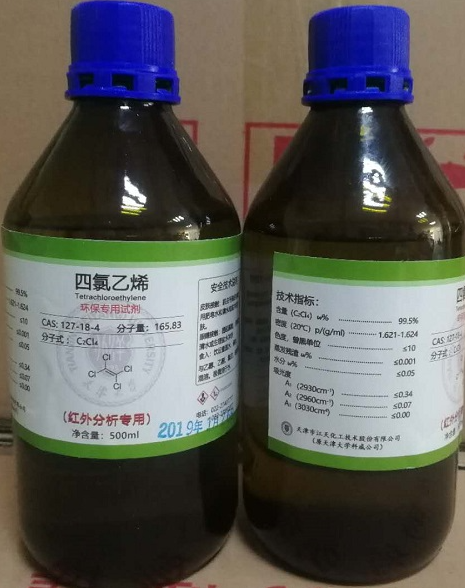
Against a backdrop of tightening environmental regulations for the global dry cleaning and metal cleaning industries, the industrial landscape of the traditional solvent perchloroethylene (PCE/PERC) is undergoing a critical split. Recently, an industrial-grade perchloroethylene with ultra-low impurities, produced via closed-loop regeneration and distillation processes, has achieved stable mass production. Its total key impurities are below 100 ppm, and it has simultaneously obtained mass balance certification under the International Sustainability & Carbon Certification (ISCC) PLUS scheme. This provides a compliant, traceable transitional solution for specific industrial sectors unable to fully transition in the short term, while forming a market complement to emerging green alternatives like hydrofluoroolefins (HFOs).
1. Technical Milestone: Closed-Loop Recovery and Deep Purification
The core of this industrialization lies in transforming perchloroethylene from a "single-use consumable" into a "recyclable process medium":
Integrated Closed-Loop System Equipment
Patented Recovery Process: Large industrial users (e.g., metal processing clusters) are equipped with integrated distillation recovery units. This system increases the recovery rate of spent solvent to ≥95%. Through azeotropic distillation and molecular sieve adsorption, the recycled product's purity is restored to ≥99.9%, achieving on-site material circulation.
Emission Reduction Benefits: This model reduced overall PCE procurement by 70% and corresponding potential atmospheric emissions by over 85% in a pilot industrial park.
Targeted Impurity Removal and Stabilization
Catalytic hydrodechlorination technology controls the content of impurities prone to causing equipment corrosion and decomposition—trichloroethylene and pentachloroethane—to ≤10 ppm and ≤5 ppm, respectively.
The addition of proprietary stabilizers extends the product's shelf life in sealed drums to 24 months (change in acidity value ≤1.5 mg KOH/g), far exceeding industry standards.

2. Sustainability Certification and Compliance Pathway
The product meets existing regulatory frameworks through innovative models:
| Certification/Compliance Pathway | Core Mechanism & Purpose |
|---|---|
| ISCC PLUS Mass Balance Certification | Accounts for recycled chlorine sourced from the chemical recycling of waste plastics as feedstock according to mass balance rules, reducing its "embedded carbon footprint" by 40% and providing downstream users with environmental reporting support. |
| EU REACH Regulation | Registered as a "recoverable" substance, supporting continued use in strictly controlled closed-loop industrial systems in line with relevant authorized uses. |
| Occupational Exposure Limit (OEL) Management | The product comes with a contact monitoring solution based on real-time sensors, helping users maintain workplace concentration levels at ≤10 ppm (well below the typical 25-50 ppm limit). |
3. Industry Impact: Serving Existing Markets and Enabling Transition
This solution precisely targets the "existing asset market" unable to immediately replace equipment:
Traditional Dry Cleaning Industry: Offers professional laundry plants managed service contracts covering solvent supply, equipment maintenance, and waste recovery, ensuring compliance with environmental regulations throughout the remaining lifespan of their equipment. Data from a European laundry industry association shows this model can help member units reduce compliance costs by 30%.
Metal Processing and Precision Cleaning:
In sectors like aerospace and precision instrumentation, PCE remains difficult to replace due to its non-flammability and excellent degreasing capabilities. The ultra-low residual product reduces volatile residual (VOC) on cleaned workpiece surfaces by 90%.
This solution forms a "layered substitution" strategy with alternatives like HFO-1336mzz (hexafluorobutene): using closed-loop PCE for extremely demanding applications while gradually switching to HFOs for general applications.
4. Corporate Collaboration Case: From Product Sales to Service Delivery
A leading global chemical company has integrated this model into its solvent business division. In a collaboration with a large North American metal parts manufacturer:
"By installing a closed-loop recovery system and procuring ultra-stable PCE, the client not only achieved zero growth in solvent procurement but also reduced the unit cleaning cost by 22%. This success case has led three similar factories to adopt the same solution."
The manufacturer's comprehensive solutions include:
Circular Lease Model: Customers pay a service fee; the supplier provides the solvent, recovery unit, and handles regeneration, with asset ownership remaining with the supplier, reducing customer investment risk.
Alternative Technology Assessment Service: Provides free techno-economic feasibility reports for clients evaluating a switch from PCE to other alternative solvents (e.g., HFOs, modified alcohols).
Global Waste Solution Network: Establishes centralized regeneration centers in major industrial zones to handle waste liquid from small users lacking recovery equipment.
5. Verifiable Data and Risk Control
All claims are based on transparent data:
Product Standards: Purity and impurity analysis follows ASTM D4276 and ISO 2212 standards.
Emission Monitoring: Closed-loop systems are equipped with online PID sensors, with data uploaded in real-time to a cloud platform for regulatory verification.
Toxicological Data: Consistent with traditional PCE, classified as Carcinogenicity Category 2, Specific Target Organ Toxicity (repeated exposure) Category 1. Mandatory requirement for adsorptive exhaust gas treatment units in use systems.
The launch of closed-loop perchloroethylene technology and certified recycled products does not aim to extend its lifespan as a mainstream solvent, but to provide a responsible transition and exit strategy for the vast stock of existing industrial assets. It minimizes environmental and occupational health risks to the lowest level achievable with current technology through innovation, buying time and financial buffer for the industry's ultimate transition to greener solvents, demonstrating the deep application of circular economy and risk management principles in the traditional chemicals sector.
- Previous : Medicinal Morphine Supply Chain Achieves Full-Process Digital Traceability and Green Chemistry Synthesis Breakthrough, Receives International Narcotics Control Board Certification
- Next : Polyethylene Glycol (PEG) Market Surges at 6.1% CAGR: Fueled by Medical Innovations and Sustainable Shifts