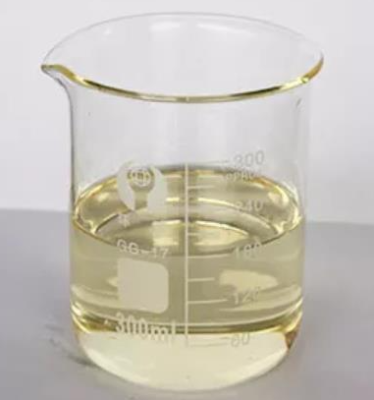
The global polyacrylate sodium market is experiencing steady growth, with its 2024 market size reaching approximately $15 billion, projected to climb to $16.2 billion in 2025 at an 8.0% growth rate. This expansion is primarily fueled by surging demand from the hygiene products sector, which accounts for 70% of total consumption, alongside the rising adoption in water-saving agriculture and wastewater treatment. Asia-Pacific dominates as the largest consumer market with over 45% share, led by China and India. Meanwhile, industry players are accelerating the shift toward degradable and high-performance products to address environmental concerns and meet stringent regulatory requirements, marking a new phase of high-quality development for the sector.
The polyacrylate sodium industry has maintained robust growth momentum amid global economic recovery, supported by diversified downstream demand. According to 2025 industry reports, the global market scale for superabsorbent polyacrylate sodium reached around $15 billion in 2024, with an 8.3% year-on-year growth, and is expected to hit $16.2 billion in 2025 . In terms of regional distribution, Asia-Pacific holds the dominant position with over 45% of the global consumption, driven by the booming demand for baby diapers and adult incontinence products in China and India . North America and Europe follow with 25% and 20% market shares respectively, where mature markets are increasingly leaning toward degradable products due to stricter environmental regulations .
China, as a major producer and consumer, contributes significantly to the global market. The country's total production capacity of polyacrylate sodium reached 850,000 tons in 2024, with an actual output of 680,000 tons and a capacity utilization rate of about 80% . Leading domestic manufacturers include Shandong-based enterprises (23.5% capacity share), Jiangsu-based counterparts (20% share), and Zhejiang-based firms (14.1% share), all of which plan capacity expansions in 2025 to meet growing demand . Globally, BASF, Nippon Shokubai, and LG Chem are key players, with BASF capturing a 22.5% market share in 2024 .
Polyacrylate sodium's exceptional water absorption, thickening, and flocculation properties enable its widespread use across multiple industries, with three sectors emerging as primary demand drivers:
Hygiene Products: As the largest application segment, this sector consumed 1.8 million tons of polyacrylate sodium globally in 2024, projected to rise to 1.95 million tons in 2025 . Its ability to rapidly absorb and lock in liquids makes it a key component in baby diapers, adult incontinence products, and feminine hygiene products. In China alone, the hygiene sector demanded 450,000 tons of the material in 2024, with a projected 2025 figure of 490,000 tons . The global aging population and rising disposable incomes in emerging markets are expected to drive double-digit growth in adult incontinence product demand .
Agriculture: As a high-efficiency water-retaining agent, polyacrylate sodium addresses water scarcity challenges exacerbated by climate change. The global agricultural sector consumed 800,000 tons in 2024, with demand forecast to reach 850,000 tons in 2025 . In China, agricultural demand stood at 200,000 tons in 2024 and is expected to grow to 220,000 tons in 2025 . Modified products with 450-500x water absorption rates have proven effective in arid and saline-alkali regions, increasing crop yields by up to 20% in pilot projects . The global market for polyacrylate sodium in water-saving agriculture is projected to reach $5 billion with an annual growth rate exceeding 8% .
Water Treatment: Leveraging its strong flocculation performance, polyacrylate sodium is widely used in municipal sewage and industrial wastewater treatment. In China, the water treatment sector accounts for over 60% of total demand . It effectively removes impurities and improves water purification efficiency, with major treatment plants consuming over 50,000 tons annually . Stricter wastewater discharge standards globally are further boosting demand in this segment.
Additionally, the material finds applications in food processing (as thickeners and stabilizers), cosmetics (for emulsification and moisture retention), and pharmaceuticals (in drug delivery systems) .
The industry is undergoing technological upgrading to solve long-standing challenges, with "high performance, green degradation, and customization" becoming key innovation directions:
Degradable Product Development: Responding to concerns about soil compaction from traditional non-degradable products, enterprises have developed degradable polyacrylate sodium with degradation rates exceeding 90% . These products avoid reducing soil organic matter and beneficial microbial populations, complying with national environmental standards .
Performance Enhancement: Traditional products often lose 40% of water absorption capacity in alkaline soils (pH>8), failing to meet the needs of China's 15% saline-alkali farmland . New modified technologies, such as introducing hydrophilic groups and optimizing crosslinking agents, have increased water absorption rates to 450-500x and reduced performance loss in high-pH environments to just 10% . High-crosslinking technology has also extended water retention time from 90 days to 180 days .
Customization for Diverse Scenarios: To adapt to China's varied soil types and climates, manufacturers now offer tailored solutions—acid-resistant products for southern red soil (pH<5.5) and high-temperature-resistant formulations (up to 60℃) for southern regions . However, only 15% of enterprises currently have the capability to provide customized formulas .
In high-end segments, companies like Wanhua Chemical and Satellite Chemical have built 10,000-ton-scale production lines for high-purity polyacrylate sodium (monomer residue ≤50 ppm), entering high-value markets such as lithium battery diaphragm coatings .
Stringent environmental policies and "dual carbon" goals are driving structural adjustments in the polyacrylate sodium industry:
Capacity Regional Restructuring: Due to strict access controls on "high-energy-consuming, high-emission" projects in East China, new capacity is shifting to western regions like Inner Mongolia, Ningxia, and Xinjiang, which have greater environmental capacity . This has formed a pattern of "eastern refinement, western expansion, northern green development, and southern control" . In 2024, the approval rate for new capacity in East China dropped by 38.6% year-on-year .
Carbon Emission Constraints: Since 2025, enterprises with annual comprehensive energy consumption exceeding 5,000 tons of standard coal have been included in the national carbon market. Those with carbon emission intensity above 2.0 tons CO₂/ton face additional costs of $25-35 per ton . This has accelerated industry consolidation, with the CR5 (top five enterprises' market share) reaching 52.3% in 2024, up 14.7 percentage points from 2020 .
Emission Standard Upgrades: New pollutant discharge standards implemented in 2025 require particulate matter ≤10 mg/m³ and non-methane hydrocarbons ≤20 mg/m³ . Approximately 42% of existing production lines need upgrades, with per-ton investment of $160,000-240,000 . Meanwhile, 12 national green factories with water reuse rates ≥90% enjoy tax incentives and have a capacity utilization rate of 89.4%, far above the industry average of 67.2% .
The polyacrylate sodium market is poised for sustained expansion, with high-value and environmentally friendly products becoming new growth engines. According to forecasts, the global market is expected to reach approximately $86 billion by 2031, with a CAGR of 3.4% from 2025 to 2031 .
Emerging Segments Shine: The electronic-grade polyacrylate sodium market, used in lithium batteries and semiconductor cleaning, is projected to grow from $1.2 billion in 2025 to $3.3 billion by 2030, representing a CAGR of 22.6% . However, domestic supply currently meets only 35% of demand due to strict purity requirements .
Green Product Penetration: Degradable polyacrylate sodium is expected to account for over 60% of total demand by 2025, driven by agricultural and environmental applications . Policy support for green manufacturing will further accelerate this transition.
Industry Concentration to Rise: Small and medium-sized enterprises lacking technological reserves and carbon management capabilities will face increasing pressure, while leading firms with integrated industrial chains, green energy access, and high-end certifications are likely to capture more market share. The high-purity specialty segment is expected to maintain a return on investment of 18-22%, significantly higher than the 8-12% of general products .

 Español
 العربية
 Francés
 Русский
 Português
 Deutsch
 Italiano
 Kazakh
 Uzbek
Uzbek